
“When you pet a dog or listen to a cat purring thinking may subside for a moment and a space of stillness arises within you, a doorway into Being”
Eckhart Tolle
“When you pet a dog or listen to a cat purring thinking may subside for a moment and a space of stillness arises within you, a doorway into Being”
Eckhart Tolle
Animals have the ability to form strong connections with humans and vice versa, sometimes referred to as the Human-Animal bond. A growing awareness of how helpful this bond can be in a therapeutic context has led to the establishment of many AAT programmes. Approaches are usually client-centred although they may be designed to achieve specific therapeutic goals. Animals that meet certain criteria are selected by suitably qualified professionals and these become an integral part of the treatment process. Well run programmes ensure careful risk assessment, monitoring and recording.
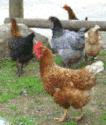
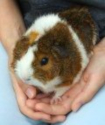
Many different types of animal may be included in AAT programmes, including fish and birds, but I work mainly with guinea pigs, cats, dogs, chickens, pigs and horses. I follow accepted guidelines to ensure the health, safety and wellbeing of clients and animals. The activities involved depend on client preferences and needs as well as the treatment plan but can include watching, touching, stroking, grooming, washing, feeding or generally caring for the animal. Some clients also enjoy collecting eggs, lead walking dogs or helping to train the Kune Kune pigs.
Animals offer affection and unconditional acceptance. They are responsive, live in the ‘here and now’ and don’t mind who you are or what you look like. They are usually direct and honest and unlike humans they are non-judgemental. Animals don’t criticise, hold grudges, change the rules or otherwise confuse through verbal communications. In fact some clients actually feel safer and less threatened around animals. Being with animals can encourage our nurturing and empathic traits and, for survivors of abuse, offer an opportunity for ‘safe touch’.
Benefits of positive interactions between people and animals are likely to include:
 Working alongside animals offers practitioners a different way of exploring difficult and sensitive issues as clients may find it easier to express their feelings and recount painful experiences.
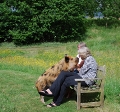
Where clients are suffering from depression, research indicates benefits such as focus of interest and positive attention, as well as pleasure in handling animals. Time spent stroking and talking to dogs can result in lowering blood pressure, relieving pain, reducing anxiety levels and enhanced mood.
Working alongside animals offers practitioners a different way of exploring difficult and sensitive issues as clients may find it easier to express their feelings and recount painful experiences.
Where clients are suffering from depression, research indicates benefits such as focus of interest and positive attention, as well as pleasure in handling animals. Time spent stroking and talking to dogs can result in lowering blood pressure, relieving pain, reducing anxiety levels and enhanced mood.